
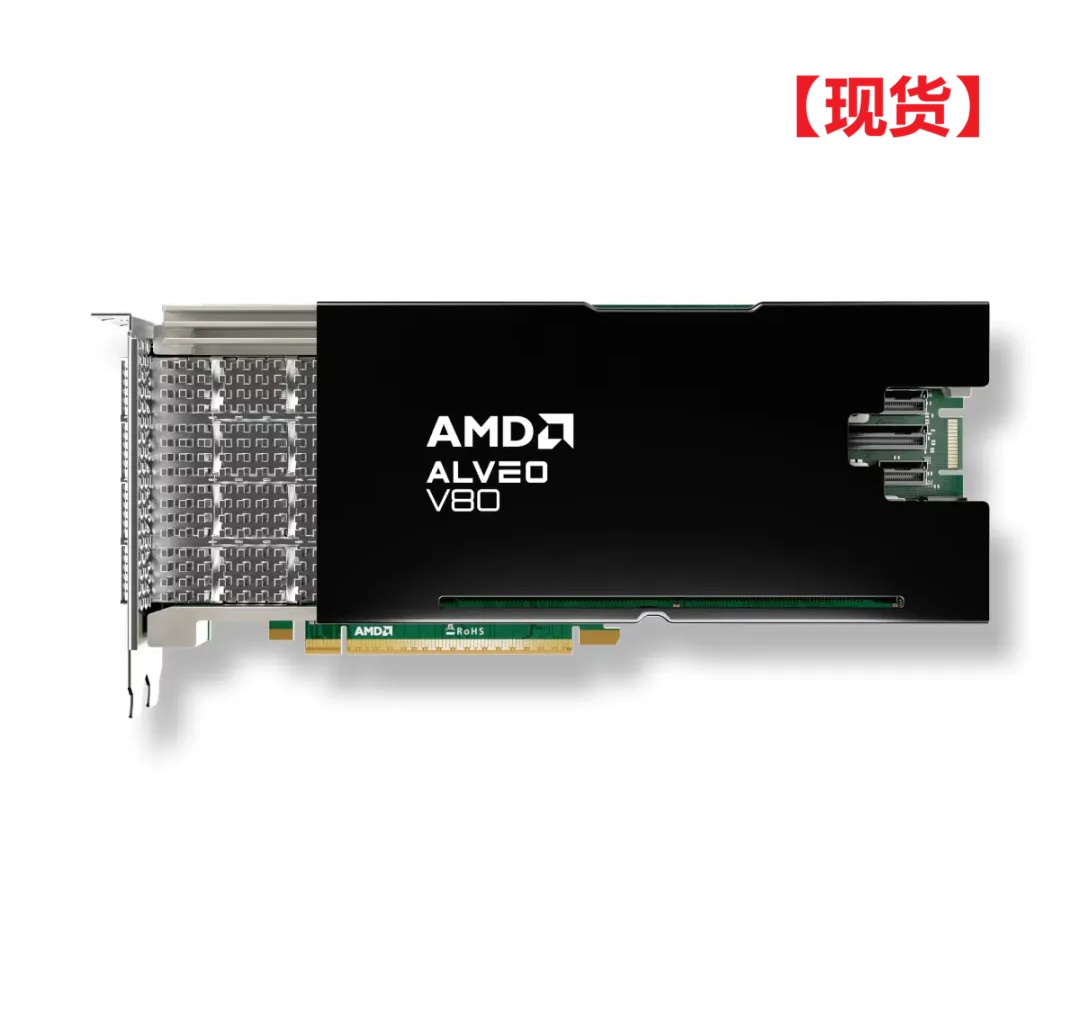
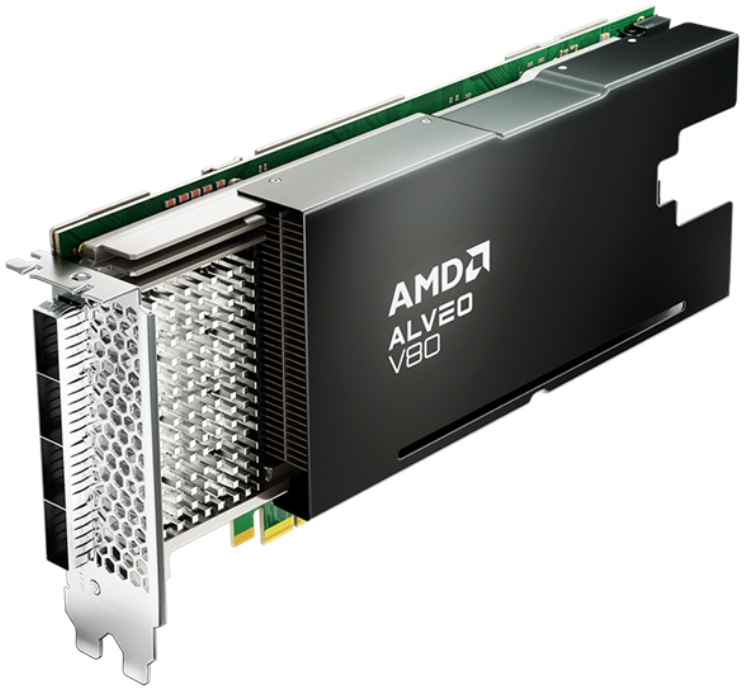
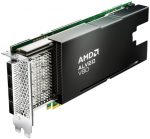
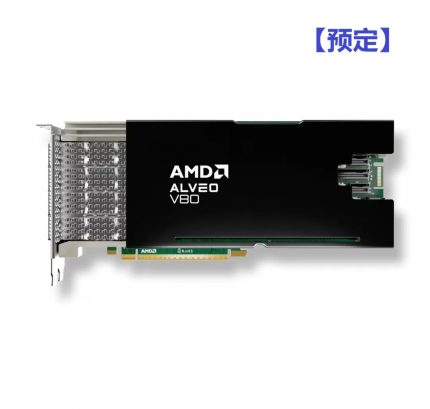
Key Features
1. Hardware reconfigurability: The same board can be reprogrammed with new bitstreams to alter the hardware circuit, adapting to evolving algorithms without hardware replacement.
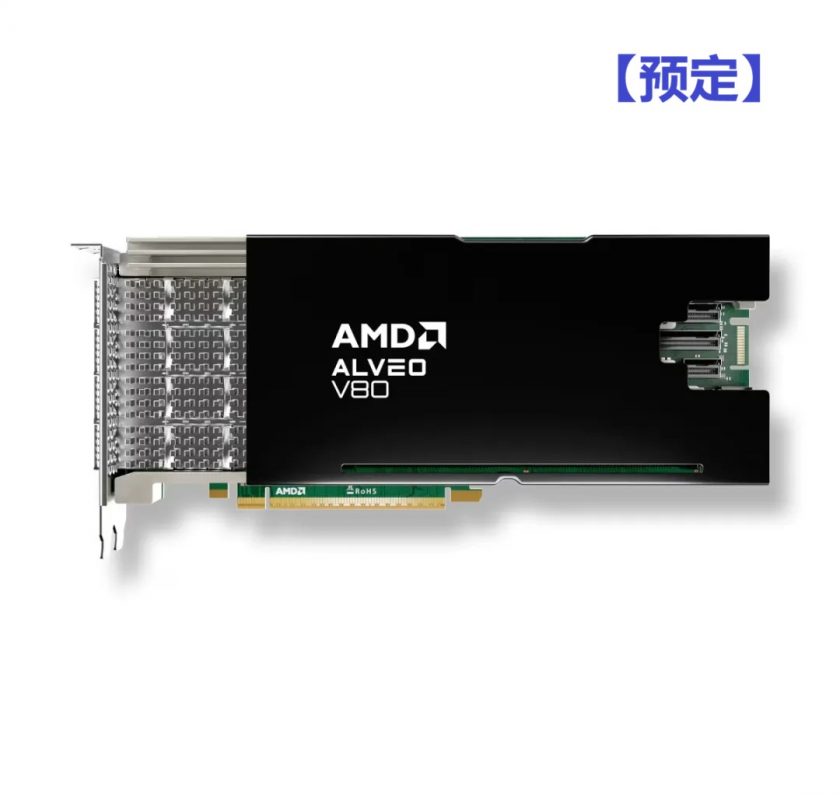
2. Memory hierarchy: DDR4 (large capacity) and HBM2/HBM2e (ultra-high bandwidth); U50/U280/U55C/V80 feature HBM to eliminate memory bandwidth bottlenecks.
3. High-speed interfaces: PCIe Gen3/Gen4/Gen5, onboard QSFP28/OSFP optical ports (100G–400G), enabling direct network connectivity and packet processing bypassing the CPU.
4. Development Stack
– Vivado: Traditional Verilog/VHDL RTL hardware development;
– Vitis: C/C++ High-Level Synthesis (HLS), enabling software engineers to develop FPGA;
– Vitis‑AI:AI Inference: DPU IP, deploy PyTorch/TensorFlow models to Alveo for CNN, YOLO and lightweight LLM inference. Line break: deployment to Alveo, doing CNN, YOLO and lightweight LLM inference. deployment to Alveo for CNN, YOLO and lightweight LLM inference.
5. Thermal: Supports active cooling (built-in fan) and passive cooling (requires forced server airflow; not suitable for desktop chassis).

Typical Applications
1. AI inference: Vitis-AI DPU for image recognition, object detection and lightweight large-model INT8 inference. Advantages over GPU: low latency, customizable preprocessing hardware pipeline, high-concurrency small-batch requests.
2. FinTech: Algorithmic trading, market data parsing, risk computation; FPGA hardware pipelines reduce network and compute latency.
3. Media processing: Video codec, real-time transcoding, live streaming media servers.
4. Networking infrastructure: SmartNIC, firewall, packet inspection, routing offload; hardware processes packets bypassing the CPU.
5. HPC: Genome sequencing, molecular dynamics, FFT signal processing, radar/communications baseband.
6. Storage/database acceleration: Database query acceleration, compression, hashing, erasure coding offload.
Reviews
There are no reviews yet.